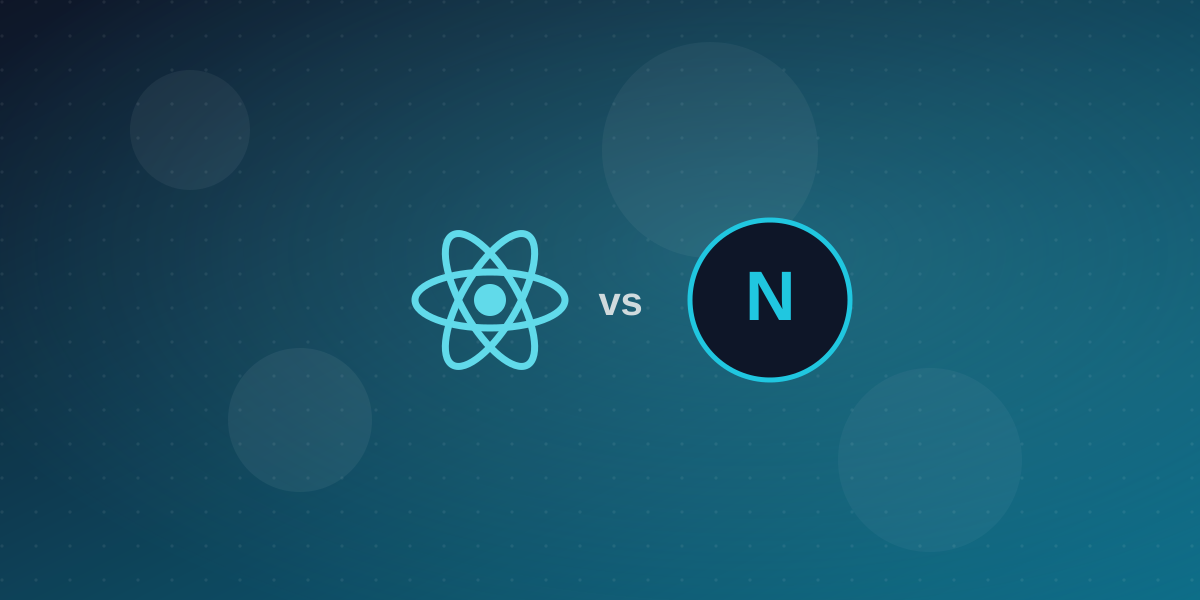
React vs. Next.js is a slightly misleading matchup, because Next.js is built on React — the real question is whether you need React on its own or the framework that wraps around it. For most business websites and applications in 2026 the answer leans one way, but not always. Here is how to tell which fits your project.
React is a library; Next.js is a framework
React gives you a way to build user interfaces out of components, and little else — routing, data fetching, and rendering strategy are all decisions you make and wire up yourself. Next.js takes React and adds the missing pieces: file-based routing, server-side rendering, image optimization, and an opinionated structure. You are not choosing between two rivals; you are choosing how much the framework decides for you.
Choose plain React when…
- You are building a highly interactive app behind a login, where SEO does not matter.
- You already have a backend and just need a front end to talk to it.
- You want full control over the build setup and are comfortable assembling the pieces.
- The app is embedded in an existing site or product rather than being the whole site.
Choose Next.js when…
- Search visibility matters — server rendering gives you SEO a plain React SPA struggles with.
- You want fast initial loads and strong Core Web Vitals out of the box.
- You need both marketing pages and an app, and want them in one codebase.
- You would rather ship features than configure routing, rendering, and builds yourself.
The question is not "which is better" — React and Next.js are the same technology at different levels of assembly. It is "how much do I want to build myself."
Our default, and when we break it
For most client projects — marketing sites, SaaS products, anything where SEO and performance affect the business — we reach for Next.js, because the defaults it gives you are the ones you would otherwise spend weeks rebuilding. We drop to plain React only for apps that live entirely behind authentication, where the framework’s rendering features add complexity without payoff. Start with the framework; step down only when the project clearly does not need it.