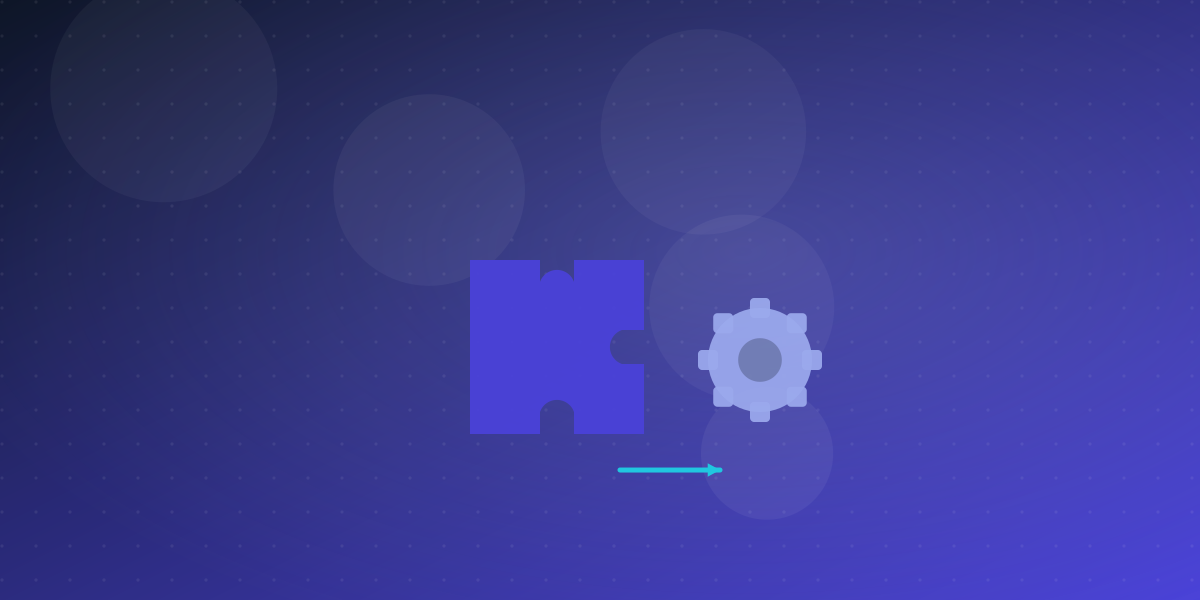
If your marketing team keeps waiting on developers to publish a page, or your site feels slow and hard to extend, the culprit is often your content management system. But "switch to headless" is not automatically the right answer. The best choice depends on how your team works, not on which architecture is trendy.
What "headless" actually means
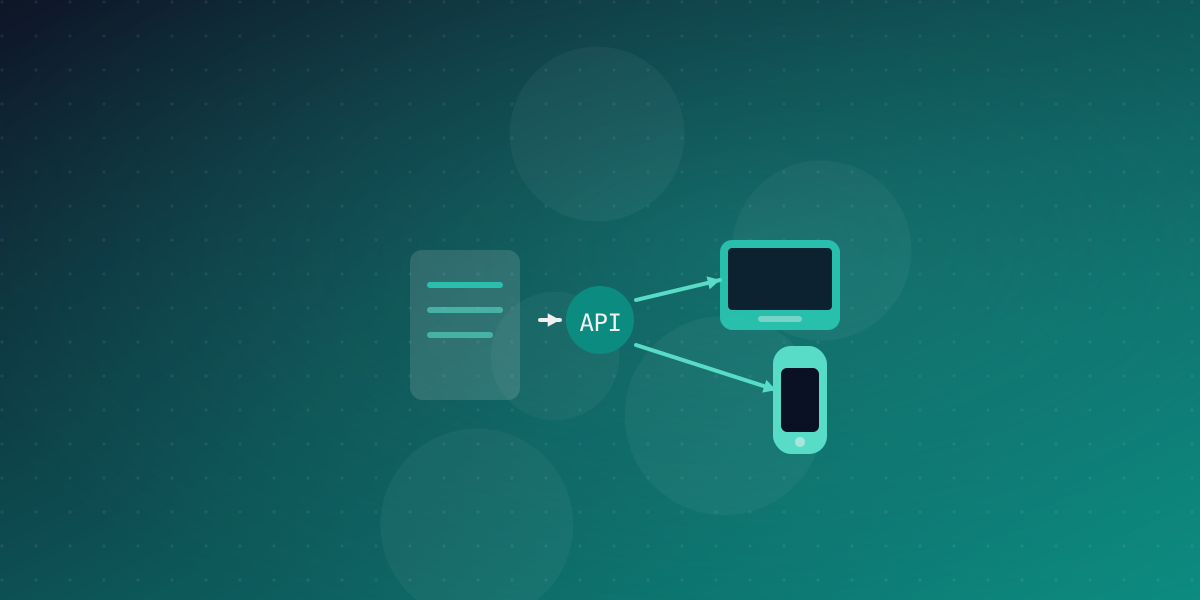
A traditional CMS like WordPress couples content management and presentation in one system — the same platform stores your content and renders your pages. A headless CMS separates the two: content lives in a structured backend (Strapi, Sanity, Contentful) and is delivered via API to any front end you like — a website, a mobile app, a kiosk, or all three at once.
That decoupling is the whole trade-off. You gain flexibility and performance, but you take on the responsibility of building and maintaining the front end.
Choose a traditional CMS when…
- You need to launch quickly with a small budget and a large plugin ecosystem.
- Your team is comfortable with themes and page builders and rarely needs custom functionality.
- You publish to a single website and have no plans for other channels.
Choose a headless CMS when…
- You publish the same content to multiple channels (web + app + more).
- Performance and Core Web Vitals matter to your traffic and SEO.
- Your content is structured and reusable, and you want a clean editor experience.
- You expect to scale and want to avoid plugin bloat and security headaches.
The right CMS is the one your marketing team can run without filing a developer ticket for every change.
Our take
For most growing businesses that care about speed and plan to reach customers on more than one channel, a headless CMS with a modern React or Next.js front end is the better long-term investment. For a simple brochure site that needs to ship next week, a well-configured traditional CMS is perfectly sensible. The mistake is picking one for reasons of fashion rather than fit.