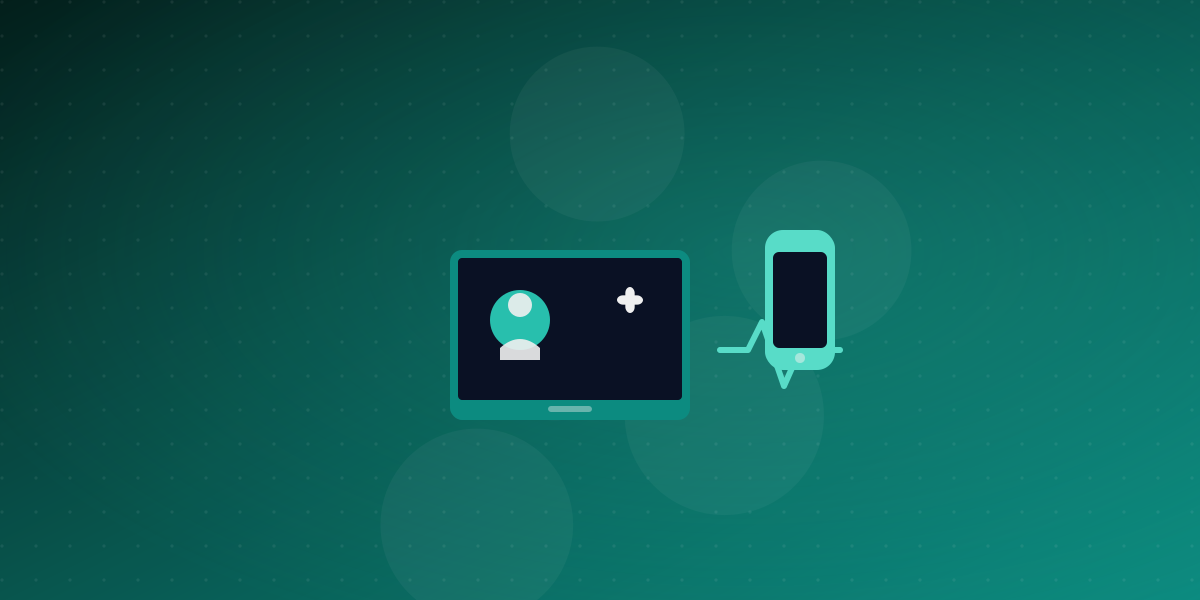
It is tempting to think of telemedicine as "video calls for doctors," but that framing leads to fragile products. A real telemedicine platform is a clinical workflow with video in the middle — scheduling, intake, the consultation, documentation, prescriptions, and follow-up all have to hold together reliably and privately.
The consultation is the easy part
A stable video call is table stakes. The hard, valuable work surrounds it: verifying identity, capturing intake and history, letting the clinician document during the visit, issuing prescriptions safely, and handing off to follow-up care. Nail the workflow and the platform becomes indispensable; nail only the video and you have built a commodity.
Reliability is a clinical requirement
- Graceful degradation — drop to audio when bandwidth fails, never the whole call.
- Redundant infrastructure, because a dropped consultation is a dropped patient.
- End-to-end privacy and encryption appropriate to health data.
- Clear fallbacks and support when technology fails mid-visit.
When a consultation drops, a patient does not see a bug — they see a doctor who vanished. Reliability is bedside manner.
Fit the clinician's day
Clinicians are busy and skeptical of tools that slow them down. The platform that succeeds integrates with their existing systems, minimises clicks, and respects their time. Software that adds friction to an already stretched clinician gets quietly abandoned, no matter how good the video quality is.